Precariously clings to a thread
of hope and longing
waiting for something to happen
that changes the way things are
or will be
Soon.
Cuckoo On A Wire 2014
Precariously clings to a thread
of hope and longing
waiting for something to happen
that changes the way things are
or will be
Soon.
 With all the Beyond Cuckoo hoopla over the last week about President Obama’s push to open relations with Cuba, I thought it was time to re-post my review of this important documentary film I did for Greener Living Today http://www.greenerlivingtoday.com/green-cuba-how-cuba-survived-peak-oil-review As usual we are quick to judge an entire nation and it’s people by it’s government. This film, available for purchase and at local libraries, takes a look at the Cuban people’s spirit, ingenuity and sense of purpose.
The Power of Community
How Cuba Survived Peak Oil
DVD 53 minutes
This movie is not about politics. The producers don’t care what you think about the Cuban government. They do care that world wide oil production has peaked and is now in decline. They care about people and community. They demonstrate how we’ll need to adapt as fossil fuels become scarce and eventually non-existent.
When the Soviet Union collapsed in 1990, Cuba faced the worst economic and social crisis of its history. The United State’s embargo pushed the country’s economy even further into decline. 
The magic in this film is the story it tells about the triumph of the Cuban people as they’re faced with what seems like a hopeless situation. Small rural and urban gardens spring up everywhere. Crops are grown in anything that will hold soil and water. Even rooftops turn green with produce. Organic is the only possible way to fertilize and with these sustainable methods the soil comes alive. Then as an added bonus diets change to include organically grown, healthy fare, and the country sees a decline in such diseases as diabetes and heart disease. Bicycles are the main means of transportation and people become fit. Communities become close knit. Everyone knows everyone out of the need to exchange goods.
The film doesn’t suggest that Cuba is a utopia. It does point out, however, that any place could and probably will face these same challenges. What would you do? How would you and your family cope? It is definitely; forgive the pun, food for thought.
Produced by the Arthur Morgan Institute for Community Solutions. Visit http://www.communitysolution.org/ for more information.

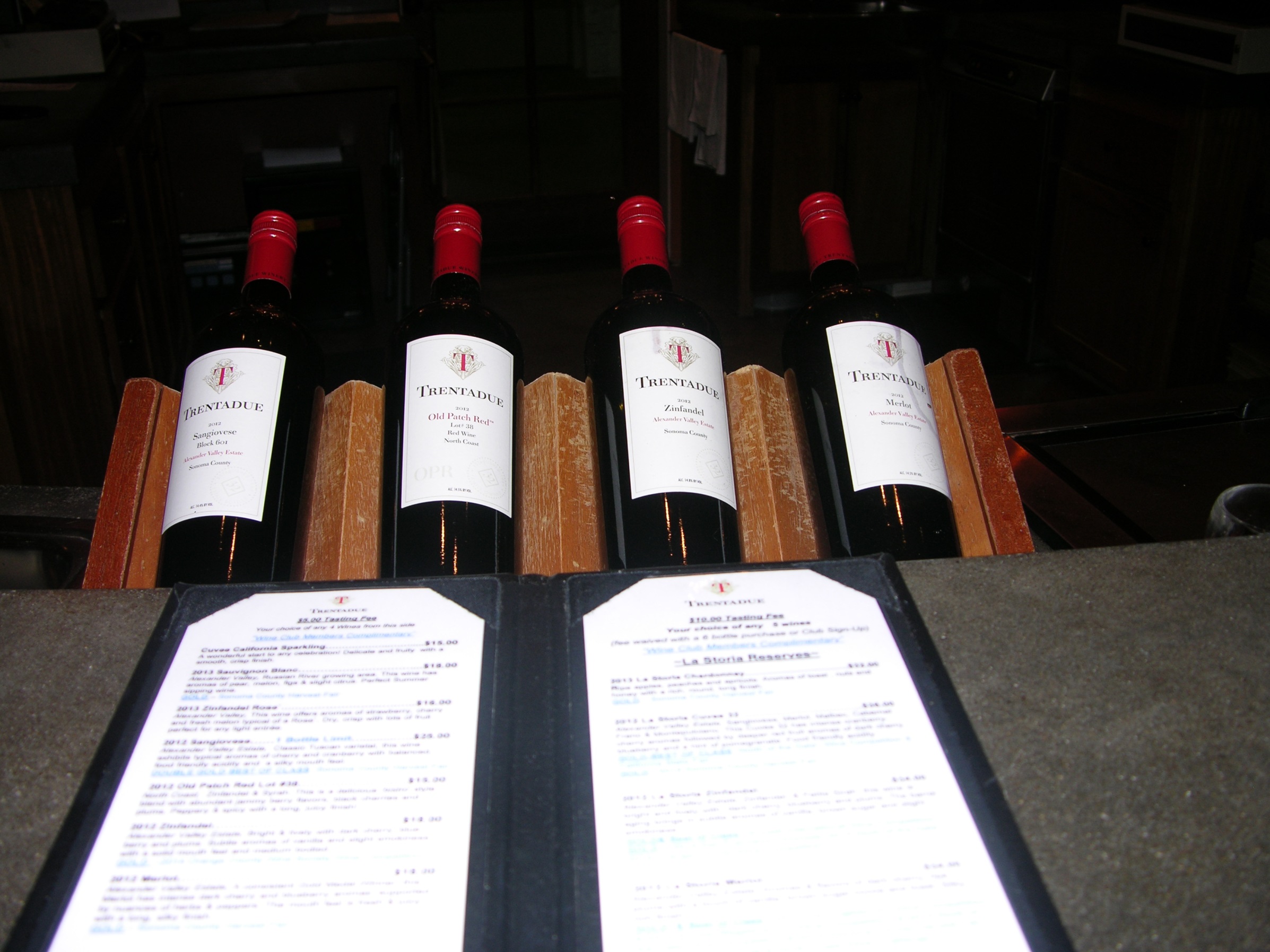
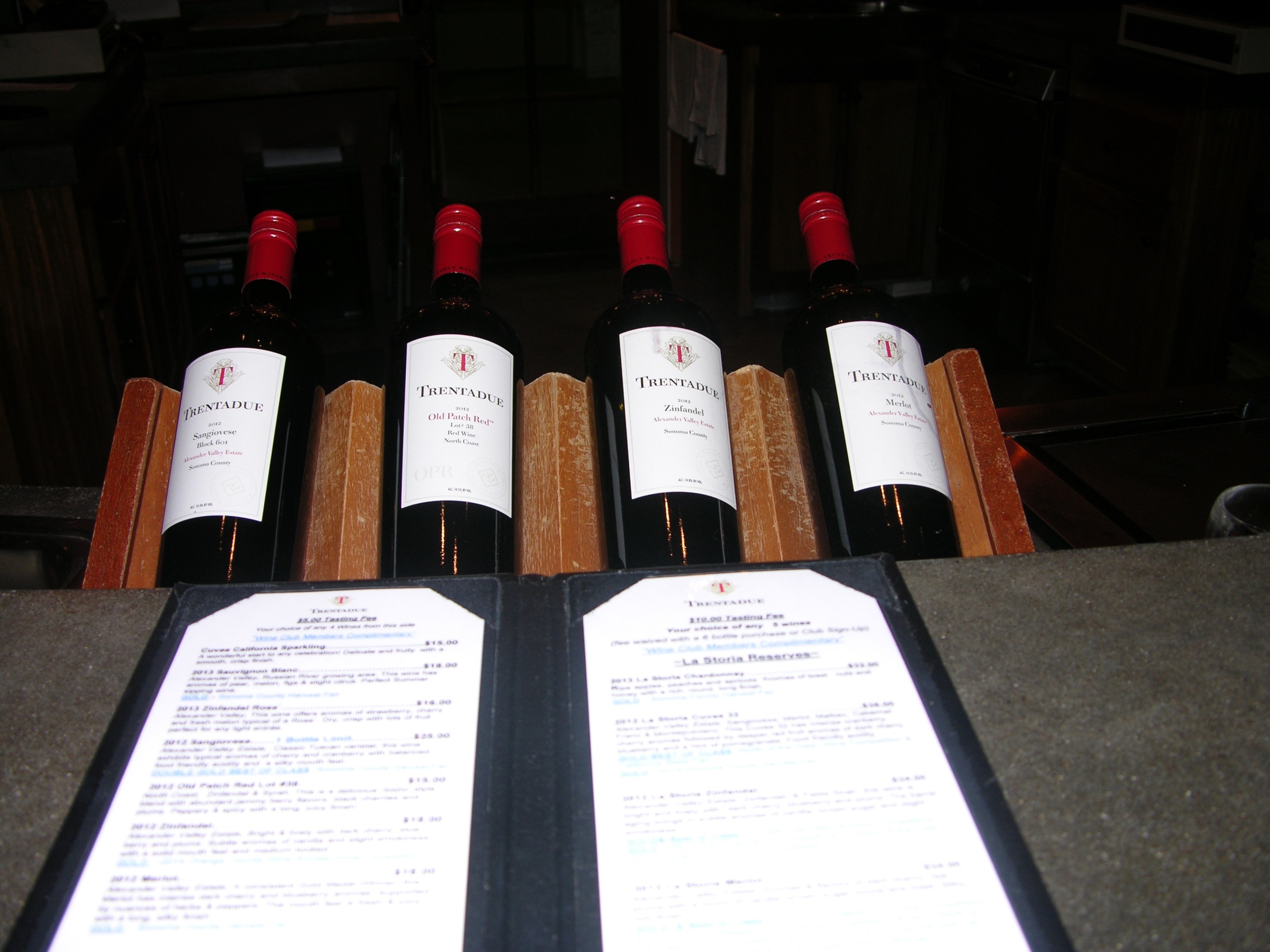
Today is Blake’s sixty-third birthday. Forty years ago we arrived in Sonoma County from Spokane Washington in our sixty-six Chevy camping van, pulling a U-Haul trailer with a German shepherd riding shotgun. We landed on a property belonging to the Trentadue Family. For some Déjà vu (also the name of our German shepherd at the time) today we did some wine tasting at the same location. The winery has changed a great deal, but the “Yellow House” crash pad, though now remodeled, looks pretty much the same. In 1976, the interior was draped in Eastern Indian print bedspreads with cotton Oriental rugs covering the beat up wooden floors. SRJC college students lived in the barn in livestock stalls. It was these students who poured wine for the first Sonoma County Harvest Fairs from laminate folding tables. It cost a few dollars to get in, and if you knew folks you could drink your fill all afternoon. Sex and drugs flowed as freely as the wine and a good time was had by all. Here’s an excerpt from my memoir “Balanced on the Edge of the Crowd” from Chapter 14 titled “Sonoma Mountain”. I guess what’s Beyond Cuckoo is that as much as things have changed; so much has stayed the same. Most of Sonoma County is as rural, protestors are once again in the news–however, the wine has gotten better
* * *
September 3, 1976, I turned twenty-four. No snow tires this year for my birthday—my gift, was a move to Sonoma County, California. We followed Paul’s directions to the Healdsburg ranch. Late afternoon shadows rippled across the driveway as we turned right off of Healdsburg Avenue—gravel crunching beneath our tires. A tan school bus with brown trim sat parked in the vineyards. I saw Claudia through the open door.
“This must be the place,” I said. “Pull up there.” I pointed to a grassy level spot a few yards ahead.
Blake maneuvered the van and U-Haul into position. I got out, walked to the bus, and knocked at the open door. “Anybody home?” I asked, knowing Claudia was inside. From past experience, I didn’t expect a warm greeting.
“Oh. Hi. Here so soon?” Claudia glanced in my direction, then back down at her knitting. The baby next to her stretched, gurgled, and opened her eyes. Claudia frowned. “Well, I guess she’s awake now,” she said with an angry look at me. “I hoped she’d sleep another hour. She’s been so cranky today.”
I shifted my stance on the steps. “Is Paul around?” I glanced over my shoulder to see if Blake was coming.
“He’s at the house. It’s up the hill a ways.”
I backed out the open door and stumbled into Blake, who caught me before I hit the ground. I winced from a slightly twisted ankle and waited for the blood to drain from my face, before I choked out: “Let’s find Paul. Claudia’s busy with the baby.”
Blake let Déjà out of the van, and he ran ahead as we hiked up the hill. The potholed road, flanked by prune orchards, ended at a rustic farmhouse. The sounds of music, chatter, and laughter poured from the open windows.
“Déjà, you stay outside. We’ll be right back,” Blake commanded. We climbed the front steps to the wooden porch. As we approached the open door, we heard a familiar voice.
“Hey, Paul,” Blake called out.
Paul stood and came toward us. “Hey, man, you made it. C’mon in. I’ll introduce you around.”
Paul rattled off our names, then showed us around the four bedroom house. The country kitchen, filled with at least fifteen people, caught my eye. “Wow, how many people live here?” I could see only one bathroom.
“Only three couples and Carlos. Let’s go outside, I’ll fill you in about the setup.”
Paul led us to the backyard, where several men and women sat in a circle. They had small paperback books on their laps as they talked. No one gave us a second glance.
Paul explained that a local winery family owned this ranch and another house in Geyserville. Their son, Carlos, had a vision to create a commune based on Mao Zedong’s, Little Red Book. We had stumbled on the daily discussion group.
“Is that Carlos?” I asked, gesturing toward a tall, dark, long-haired man leading the discussion.
“That’s him.” Paul took my elbow and steered me away, whispering, “He doesn’t like to be interrupted. Let’s go this way.”
As we strolled the grounds, Paul repeated some of what he’d told us in Spokane: students from the local junior college lived on both properties in exchange for work. There was little structure. The core group lived in the farmhouse and a converted garage. Several small travel trailers, along with a few green canvas tents housed the seasonal help. The Yellow House in Geyserville was home to the rest of the community. “The barn next to that house had ten animal stalls converted to bedrooms,” Paul said. “At least fifty people come and go on a regular basis.”
“So, if we leave our van parked next to your school bus, can we use the bathroom and shower in the house?” Blake asked.
“Sure, but it’s first-come, first-served. There’s a waiting line in the mornings, but you can usually get in later in the day. It’s hit or miss. Claudia and I use the vineyard as a restroom. It’s too much of a hassle to climb the hill each time. Grape leaves make good toilet paper.”
I didn’t want to ask where everyone else relieved themselves. My guess was— anywhere convenient. We followed Paul back down to the bottom of the hill and our van. Paul’s black and white border collie, Moose, met up with us, and she and Déjà took off in a romp. Claudia emerged from the bus, baby in arms, and handed her off to Paul.
“Here, take Eden. I’m going up to the house for a shower. Where have you been all day?” she snarled at him.
“I went to see Kenny, then to school. Are you going to start hassling me again?”
Saying nothing, Claudia tossed a towel over her shoulder and stormed up the hill. Blake and I slowly retreated to the safety of our van.
Paul’s voice shook. “Did you guys bring dinner with you? I already ate and she won’t be back for awhile.”
“We’re fine. Don’t worry about us,” I said. Wondering if it wasn’t such a good idea staying here.
I looked at Blake. “Why don’t we turn the van around to face the other way? That way our side doors will open out with a view of the vineyard and we won’t keep anyone up at night with our lights.”
“Good idea,” Paul said as he carried his daughter inside.
“Whew! A little chilly out this evening, don’t you think?” I opened the passenger door and grabbed for my sweater.
“In more ways than one,” Blake added.
The next morning, I awoke before sunrise. It was too early for dog and man, but I had plans for a shower before the masses lined up. Donning a sweatshirt and sweatpants, I grabbed the toiletry bag and a towel. The flashlight sent an eerie glow ahead until I reached my destination. The unlocked door to the house squeaked as I pushed. As I tiptoed toward the bathroom, I prayed to the hot water goddess. Once inside, I flipped the latch closed and the light on. Hot water! Success, and without awakening anyone. I took a long leisurely shower.
Half an hour later the sun peeked over the hillside. I lingered on the front porch, surveying the beauty. A crow sat on the railing.
“Hello, big guy,” I said.
The bird tilted his head and came closer. I held out my hand. The bird didn’t move. He seemed to expect something—food maybe?
“Wait here and I’ll find you some breakfast.”
I went back into the house and found a cluster of grapes on the kitchen table. I made a mental note to add grapes to our shopping list, determined to replace anything we took.
Back outside, my new friend waited. I settled on the front steps, and the black bird fluttered to my side. He ate freely from my hand—then hopped onto my knee. I surmised that although wild, he had this routine down. We shared the sweetness of the morning, and the tart breakfast, until only stems remained in my hands. I tossed the debris in the flower bed and stretched. Mr. Crow followed suit, fanning his wings until I could see light between the tips of his feathers. I picked up my bag and he flew toward the tall trees in the distance. Clean, fed, and bird blessed, I made my way down the hill.

Thanksgiving Day 2014: We are all somewhat crazy or we wouldn’t be here today, doing what we’re doing. Here’s my top ten list of those things that I find Beyond Cuckoo.
Beyond Cuckoo:
Cuckoo Cures:
Unlike David Letterman, I’ll let you sort the above in any manner that fits. Feel free to add, subtract and multiply. However I do urge you to look at the sane and insane elements of life and choose accordingly. It is the only way to make our way back from the brink of cuckoo and regain balance, peace and love—giving new meaning to Thanksgiving Day. Blessings to you all.

As a woman that has used birth control during her entire child bearing years, I am one hundred percent in favor of a woman’s right to choose when and if to have children. In our mid-thirties, my husband Blake and I finally had that serious discussion about parenthood and were in mutual agreement to remain a childless couple.
With that said, I continue to feel that Facebook and Apple’s decision to pay for female employees to freeze their eggs is a mixed bag of tricks. I can’t help but wonder about the motivation behind high tech companies paying up to $20,000 in egg freezing expenses. A woman’s most fertile and easiest childbirth years coincide with most companies’ career-building years. I question the wisdom of intentionally postponing pregnancy until later in life for a career opportunities. I would prefer to see corporate America put these dollars into family leave, child care and flexible work arrangements for both parents.
In addition this feels like a quick fix and a Band-Aid measure that side steps the real issue–how hard it is for a woman to have a career and raise a family concurrently. The playing field has never been level when it comes to gender. Women make less and I wonder if paying them off with higher salaries, to not get pregnant, because it could inconvenience a company is wise or fair. Will those women who want to have the safest and easiest pregnancies be stigmatized as uncommitted to their careers?
There is also the issue of marital status. If a woman is single and maybe doesn’t intend to get married, will that influence an employer’s willingness to fork out so much cash? Has this been tested in the courts? Then if a young woman does freeze her eggs, will promotional opportunities be withheld because she’s seen to be on the “Mommy” track? Would she move up the ladder to reach the top only so she can take maternity leave? I’m sorry, I haven’t made up my mind completely, but there seems to be something, “Beyond Cuckoo” about all of this high tech corporate parental planning.

Recent news stories about vetoed “Ghost Gun” legislation and the security breach at the White House has gotten me more nervous than usual.
Ghost Gun is a term applied to Cody Wilson’s “Defense Distributed” organization’s first fully 3-D printed gun. This “maker” movement has enabled anyone to create a working, lethal firearm with a click in the privacy of his or her garage. He has now moved on to a new form of digital DIY gunsmithing. And this time the results aren’t made of plastic.
Wilson’s latest radically libertarian project is a PC-connected milling machine he calls the Ghost Gunner. Like any computer-numerically-controlled (or CNC) mill, the one-foot-cubed black box uses a drill bit mounted on a head that moves in three dimensions to automatically carve digitally-modeled shapes into polymer, wood or aluminum. But this CNC mill, which sells for $1200, is designed to create one object in particular: the component of an AR-15 rifle known as its lower receiver, the body of the gun—remaining parts can be ordered from online gun shops. It is now easy to create a semi-automatic weapon with no serial number or required background check. It’s illegal to re-sell your monster creation, but there’s no law against making one.
Wilson (as a self-proclaimed anarchist and anti-government rebel) makes every effort to undermine governmental regulatory control over most things, but especially firearms. If you connect the two news stories, you can’t help but wonder about the Obama family’s safety, and our own.
In addition Wilson’s releasing his creation on the heels of a debate in California over a state law that would ban the manufacture of all guns without serial numbers. The bill, widely known as the “Ghost Gun ban” and introduced by Los Angeles state senator Kevin de Leόn was designed to criminalize either 3-D printing or finishing an 80 percent lower without a government-assigned serial number in California. The legislation passed California’s senate and assembly, but was vetoed Tuesday by the state’s governor Jerry Brown, who wrote that he “can’t see how adding a serial number to a homemade gun would significantly advance public safety.”
I’m a huge supporter of Governor Brown, but I do wonder if in this case, his decision is Beyond Cuckoo.

My father’s role model was Archie Bunker. What was a stereotype to fans of “All in the Family” was real to him. We didn’t politically agree on much, but we were both glad that he had a union job.
Teddy’s thirty year stint as a New York City bus driver saved our family and allowed us to live in relative middle-class security, with food on the table, medical insurance and a few weeks of vacation each year. My mother worked as a clerical worker in the Financial District, and as a woman and non-union employee, her salary and benefits would not have sustained our family.
As a government worker, I’m also glad to have the security that union membership provides, which is why I wonder why labor unions are under attack. Let’s look at the benefits that many feel American workers should not be entitled to:
Some of the most profitable corporations pay the least wages. Teachers are underpaid and our schools suffer. Fast food workers wonder how to care for their families on minimum wage. Government is top-heavy; with management and leadership making extraordinary salaries as they negotiate against line-staff, who take the brunt of media attention for making too much and holding on to job and financial security. The gap between haves and have-nots grows to a new level that is beyond cuckoo and it will destroy America’s greatness. Happy Labor Day!